

What to Do in Dzūkija – 12 Most Interesting Places
Updated: 08 March, 2026
Before dawn, when the summer chill tickles our noses, we pack up the last snacks and head towards the wonderful Dzūkija. Towards the green forests that sing, towards the sea of berries and mushrooms. Indeed, there is something to do in Dzūkija :)
Grūtas Park – Soviet Museum, Mini Zoo
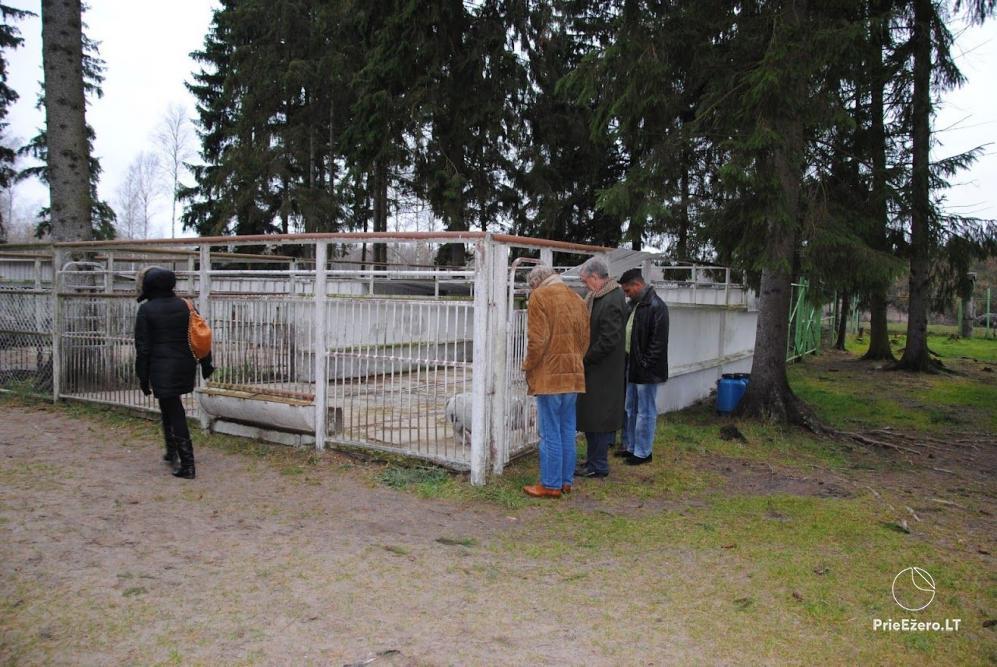
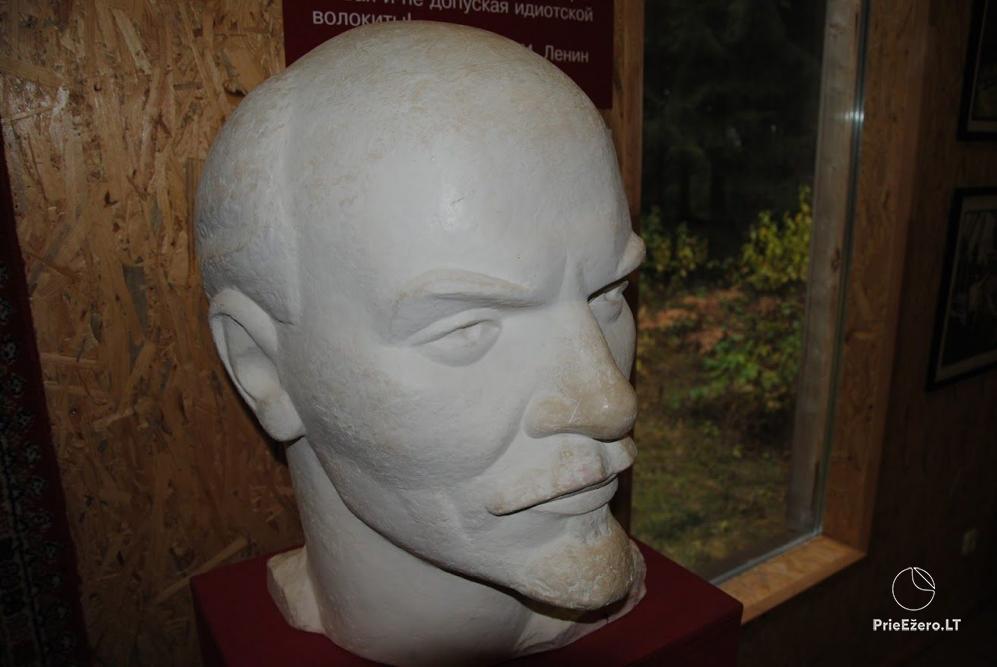
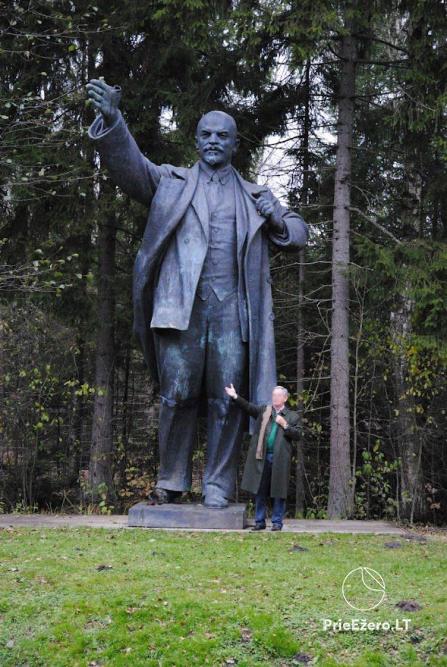
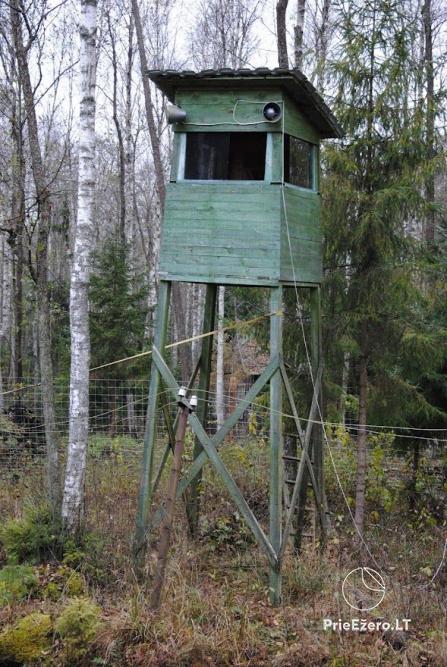
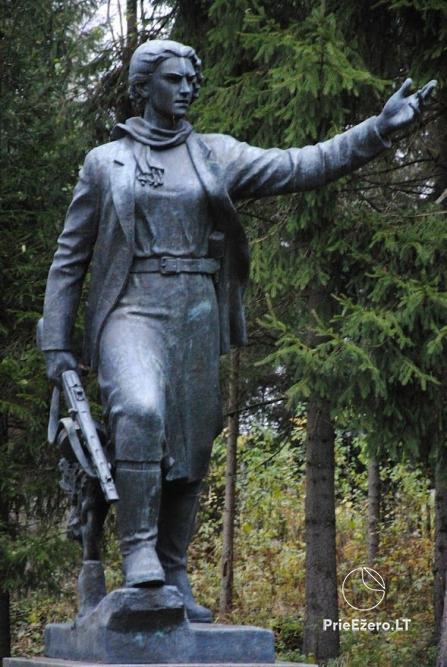
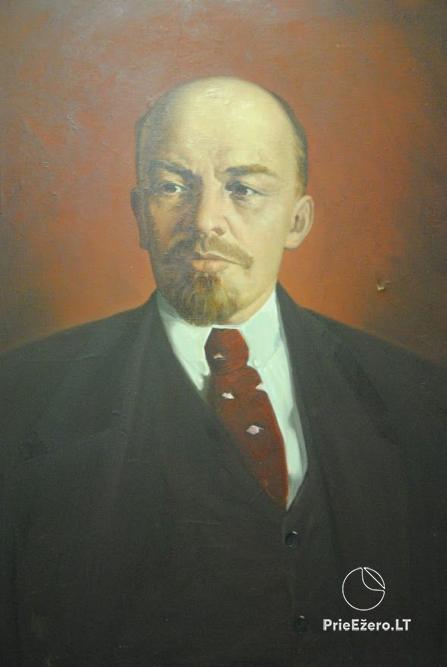
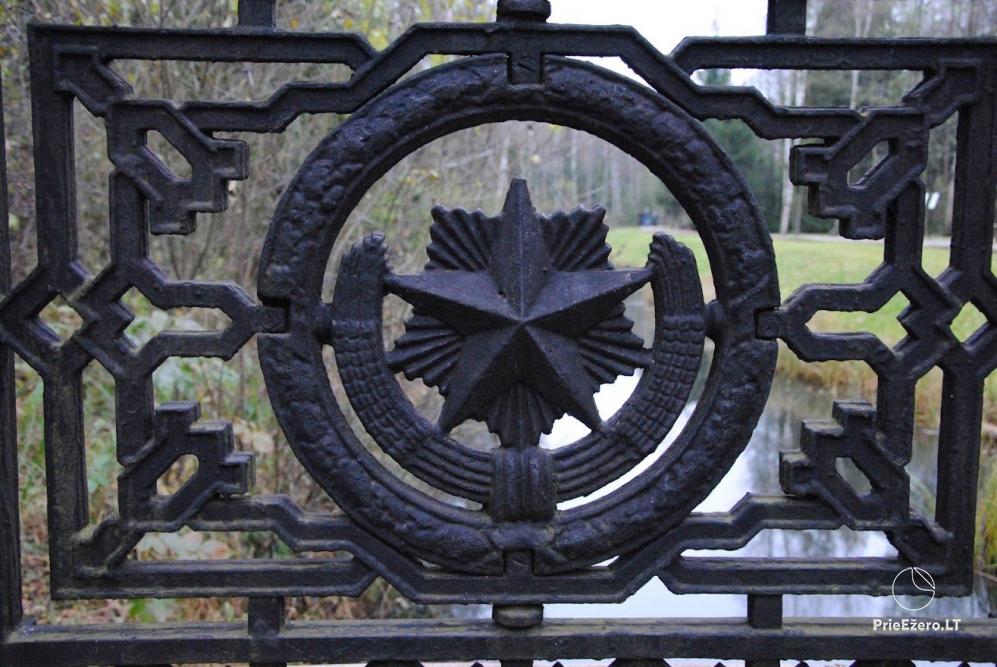
Our first stop is Grūtas Park. A park where we travel back to the youth of our parents and grandparents. When everyone had to think about how to behave, how to look and what to say. As soon as we enter, we are greeted by a train that reminds us of the painful times for Lithuania. The environment is very nicely arranged, although, like the idea of the park itself, it smells of the Soviet era. After presenting your tickets, you enter a forgotten city. In Grūtas Park, the present disappears, and a feeling of unease begins to creep in, as if someone were really going to whistle from the tower. And not so long ago, this was the "normal" reality of life. Stalin, Lenin, Gorbachev and others in the park are kings. The entire park is full of sculptures and busts of them and other similar figures, and the walls of the museum are covered with drawings, printed portraits of dictators, and propaganda slogans. I didn't feel like joking much until we reached the other side of Grūtas Park. We were greeted by a mini Zoo with an abundance of birds, bears, a fox and a few other four-legged residents. Our little traveler could hardly look away from the unseen species of pigeons until she noticed the amusement park. Swings, perhaps without a lot of lights, of any color! Not only children, but also their parents, for whom this entertainment brings back childhood memories, are waiting in line to swing on iron boats. Grūtas Park will also take care of the hungry. The Grūtas Park restaurant offers a taste of Soviet karka, sausages or kvass (in metal plates, common in Soviet times), but our journey through Dzūkija has just begun, so we are moving on.
Devil's Pit - among the 100 most visited natural monuments in Europe
Strangely enough, Trakai district belongs to Dzūkija, so when driving towards the most beautiful forests of Lithuania, it is necessary to visit the Devil's Pit. This is not just any pit. First of all, it is included in the list of 100 most visited natural monuments in Europe, secondly, it has the most interesting stories, myths and finally, it is the deepest pit in Lithuania.
It is said that in the Aukštaitija Regional Park lies the skeleton of a giant, whose mouth is the Devil's Pit. The pit itself is a regular circle, about 40 meters deep and 10 meters of surface peat. You would definitely not want to fall into this swamp. Although it is possible to wade through it in the summer, the Devil's Pit is dangerous and viscous. Scientists have not yet reached a consensus on the origin of the pit, although many agree that it is related to glaciers. We liked the mystical stories of the Devil's Pit more, after which, with our heads down, we looked for the Devil's Fingers - elongated pebbles. We found them.
Merkinė Pyramid – 20 km from Druskininkai
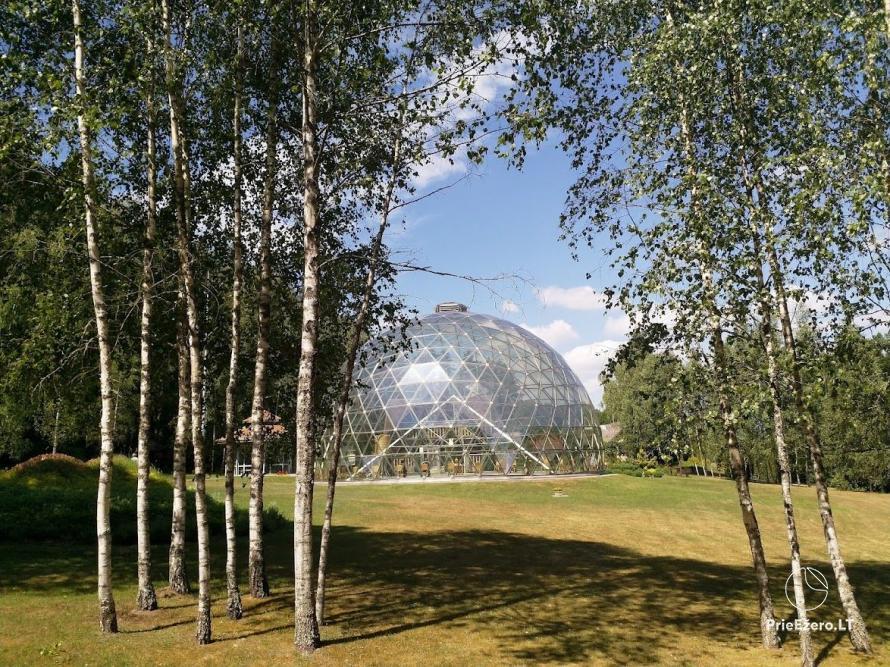
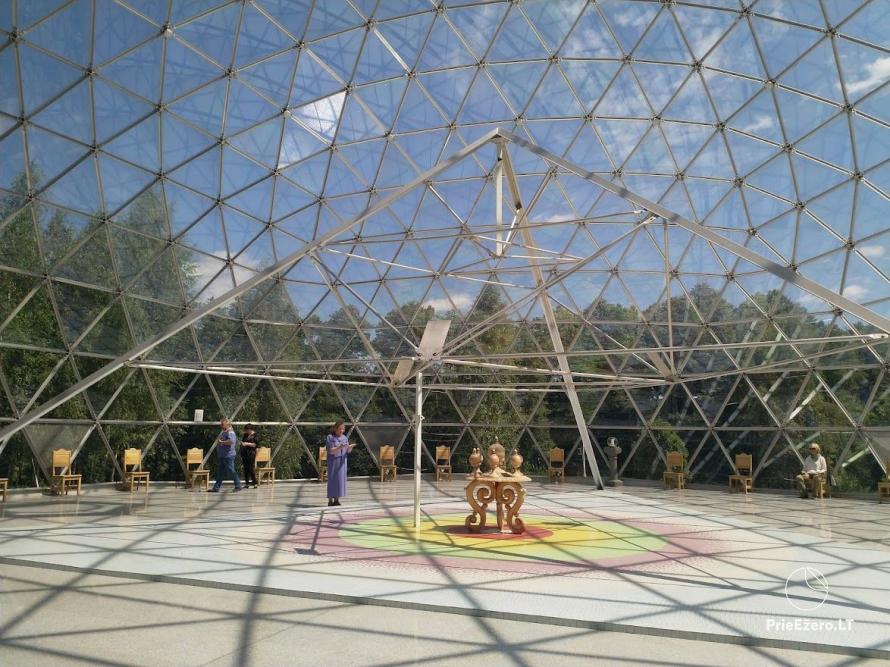
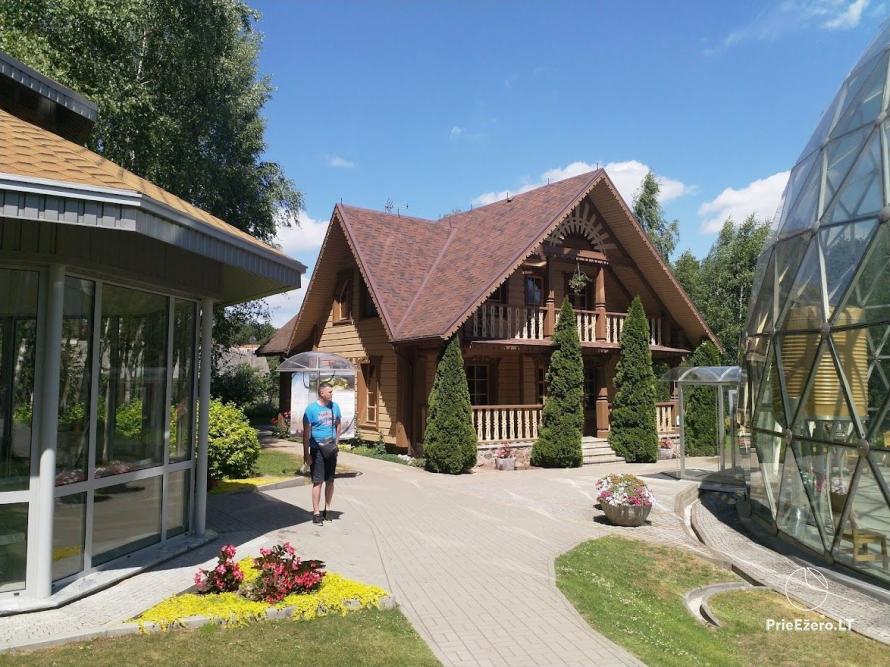
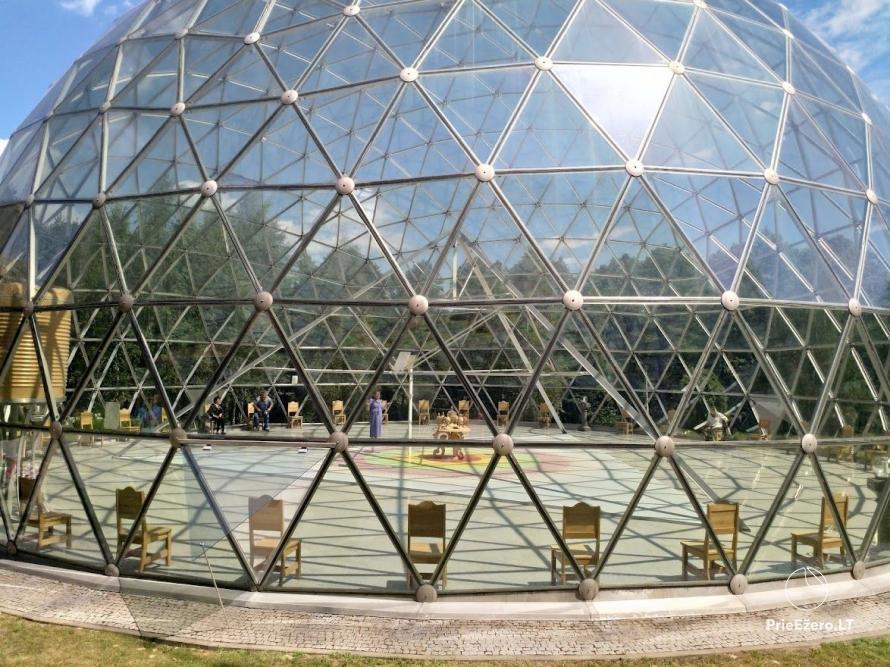
Life is a balance, so almost 20 kilometers from Grūtas Park lies the three-sided Merkinė Pyramid (here a pit, here a pyramid). In 2002, it collapsed to the ground, later it was covered with a dome, a space for the Archangel Gabriel was installed next to it, and a statue of the Archangel St. Michael was erected. Although we entered the pyramid skeptically, there is still something there. Perhaps the prevailing silence and peace, or perhaps the inner belief that a miracle can happen here, makes us stay there longer. Finally, we take a bottle of holy water with us. The arranged environment sets the mood for the first snacks, after which we move towards our grandfather’s birthplace – Merkinė.
Merkinė – a town in Dzūkija with a unique history
Merkinė smells to me of strawberries, baskets full of mushrooms and grandma's morning pancakes. Merkinė is freedom, vacation, lots of laughter, bread with tomato sauce and Buratino lemonade. It is a small town where the neighbors' geese blocked the most direct path to the store, a spring flowed and still flows, where a smiling grandfather Tadas was always waiting for us. This beloved town smells not only of childhood, it is history.
In the very center is the Merkinė History Museum, where we are greeted by a smiling guide, the price is only one euro, and what a lot of history! The little ones are interested in trying to touch and check everything, while the older ones read and listen. And the partisans, and the Jews, and Mickevičius, and King Vasa. It is incredible how one of the most impressive tourist attractions in Lithuania has grown from a simple village with three shops and a market. Merkinė is one of the most wonderful towns for a walk in Dzūkija, both in summer and in snowy winter.
Merkinė Mound – one of the most famous mounds in Dzūkija
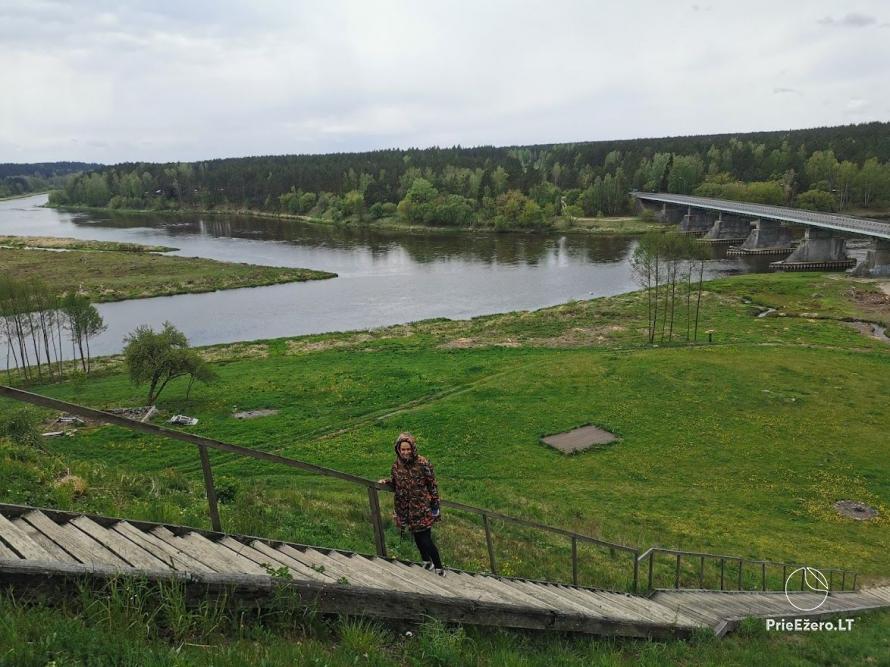
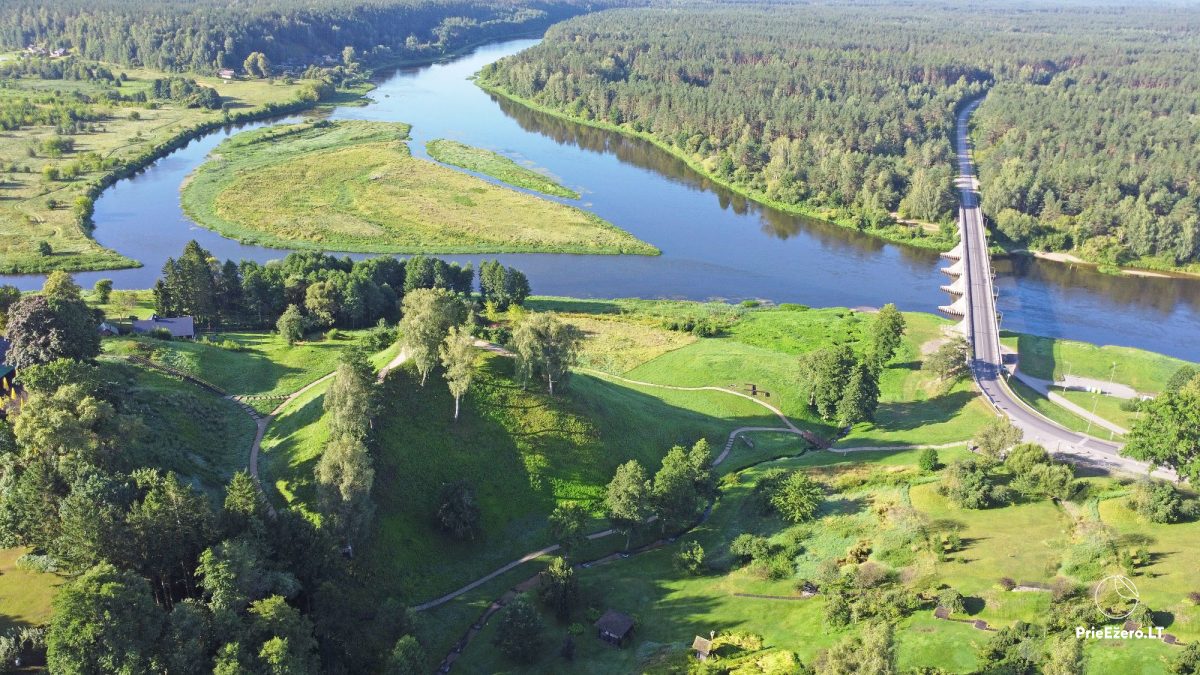
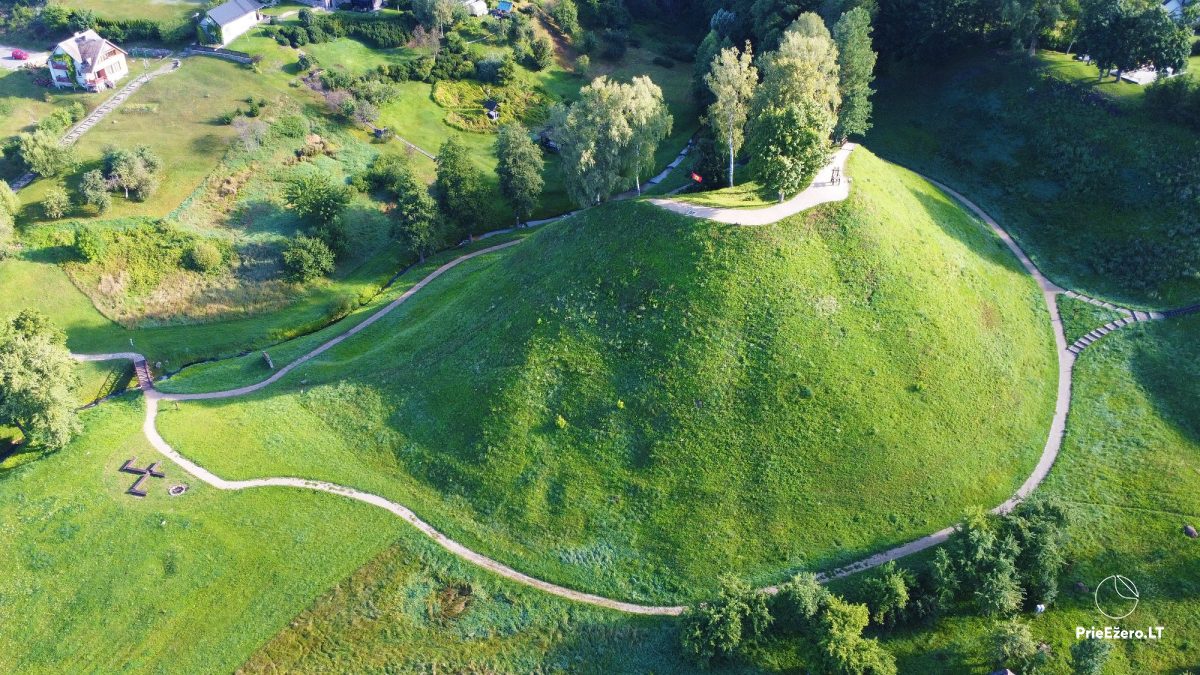
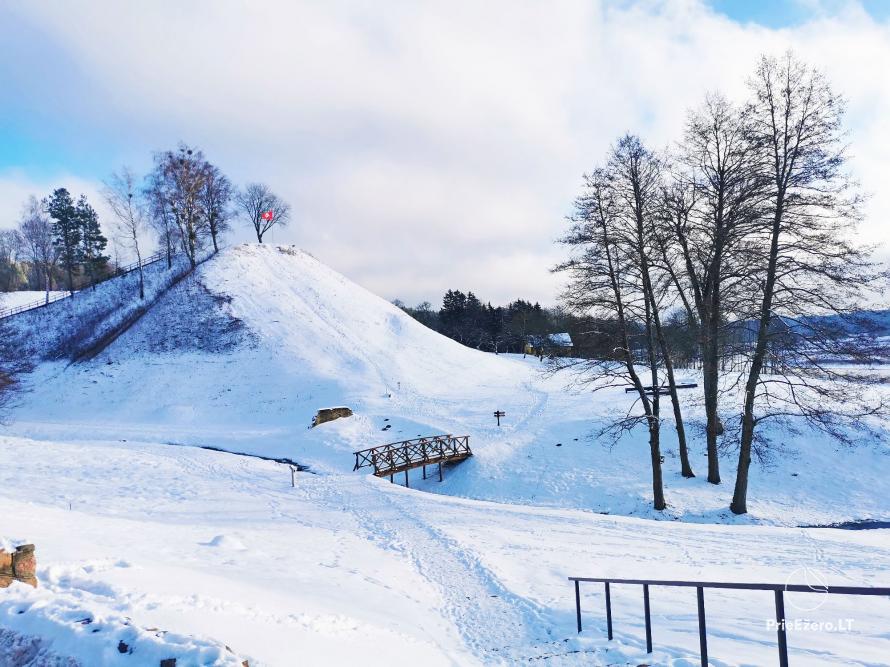
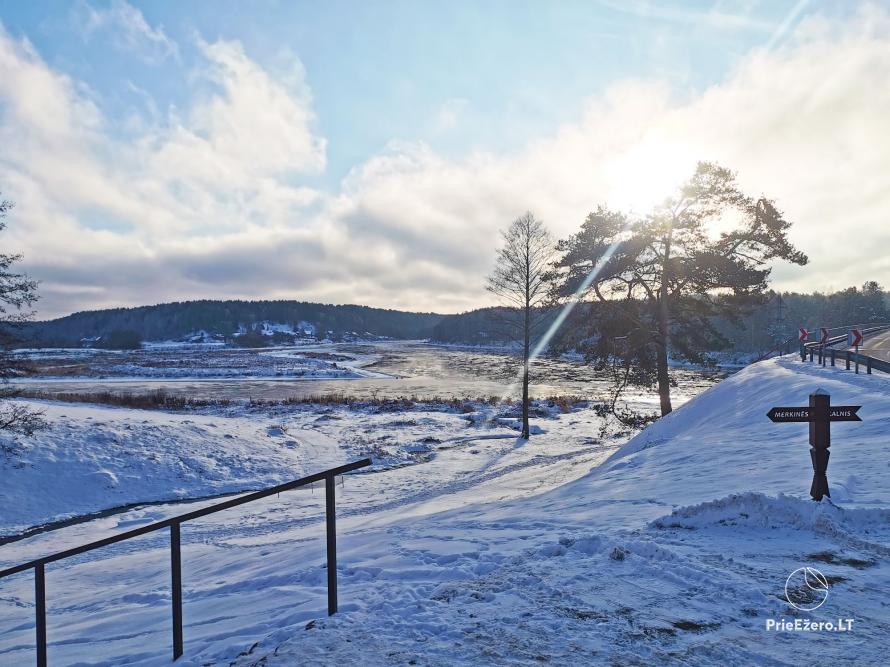
Merkinė Mound is one of the most famous mounds in Lithuanian history, its slopes reaching up to thirty meters high. The appearance of the mound is associated with Merkinė Castle, which historians find mentioned in sources as early as 1377. True, the parking lot for such a beauty could be larger, but finally, having squeezed the car into a corner, we are already counting the steps up. And indeed, an extraordinary view opens up, the confluence of two rivers, the Nemunas and Merkys. Once upon a time, the real life of the country's rulers was boiling here. The wind drives us away, so we turn towards the old steps and go down. From time to time we have to slide on the sand, but after dipping our feet in the stream of the Stangė pond, the extreme descent pays off. We splash our faces with the water of the beautiful spring, get in the car and drive on.
Merkinė Observation Tower
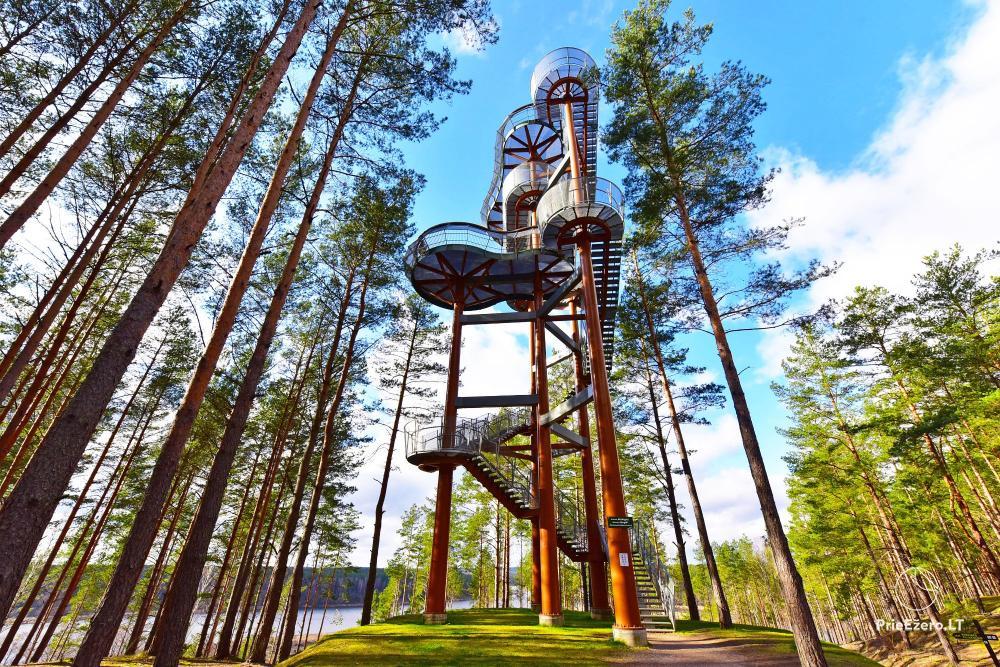
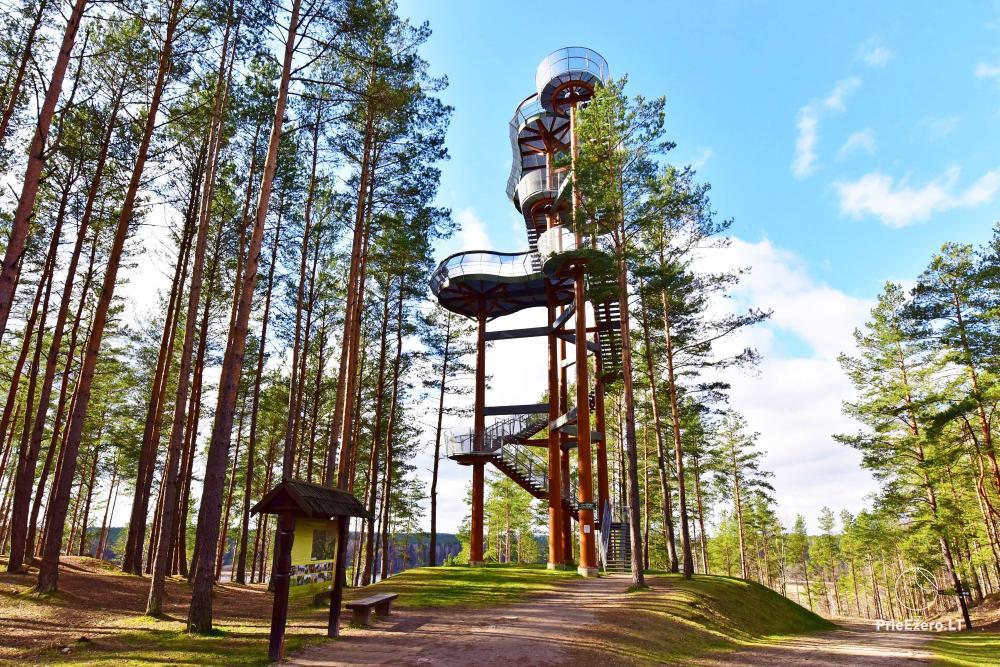
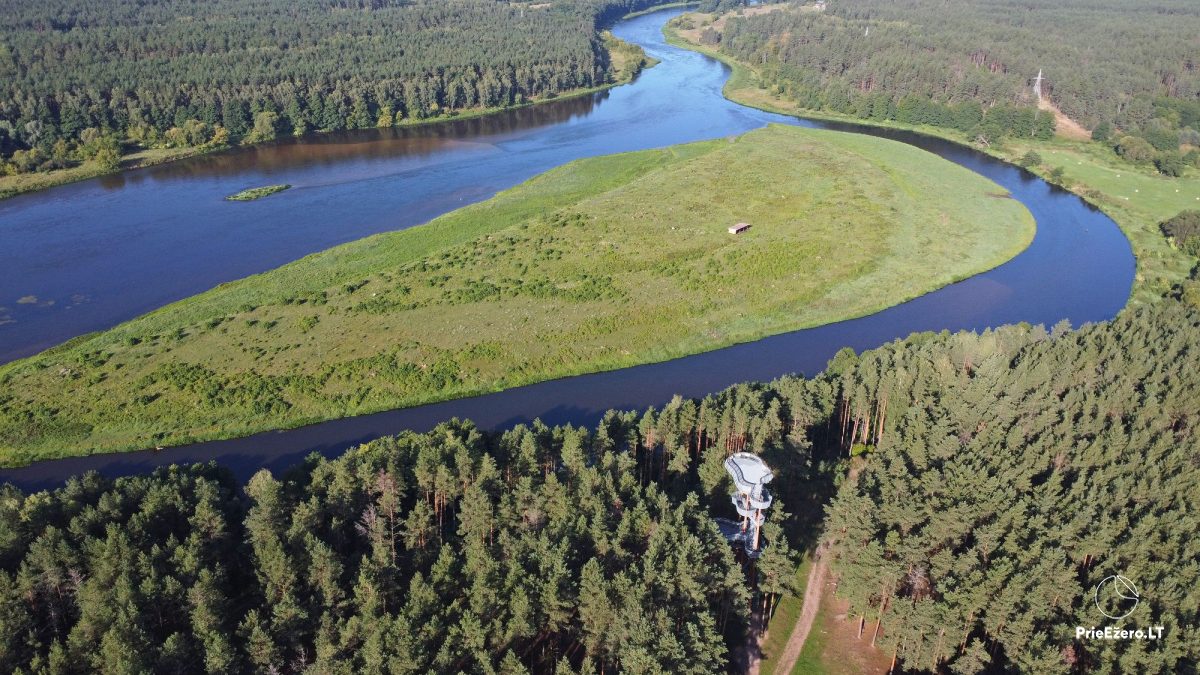
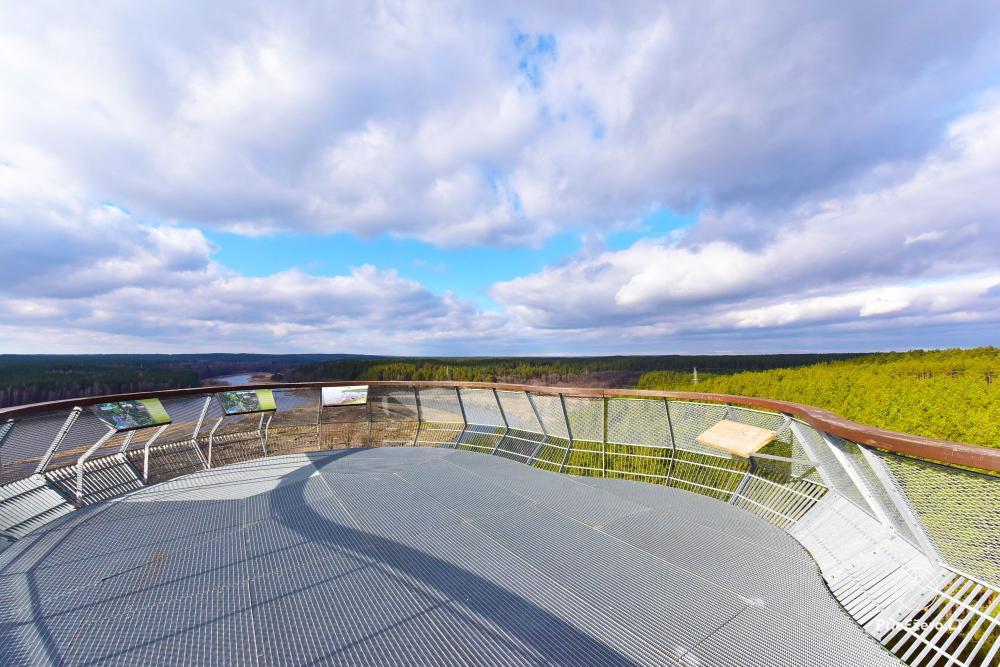
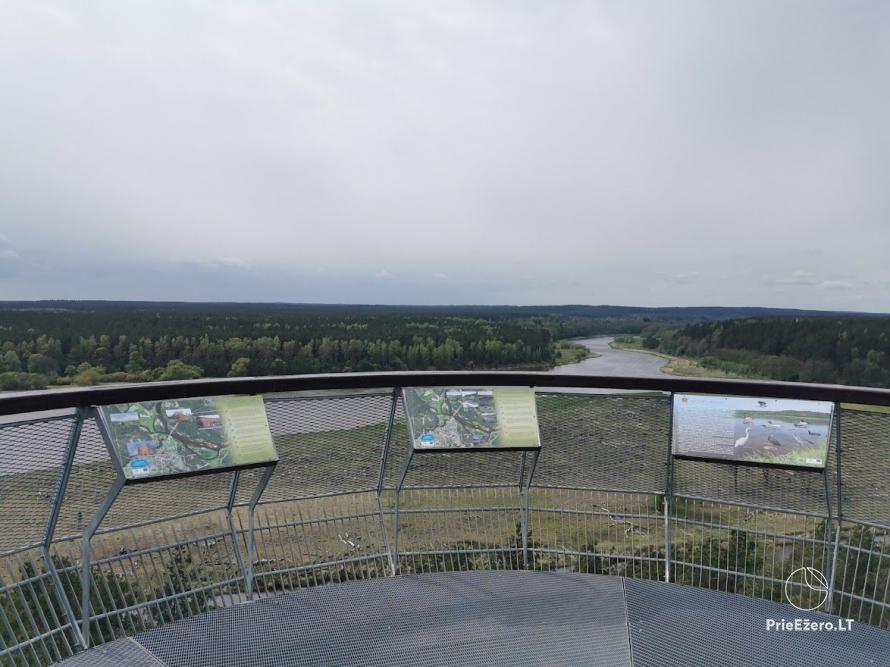
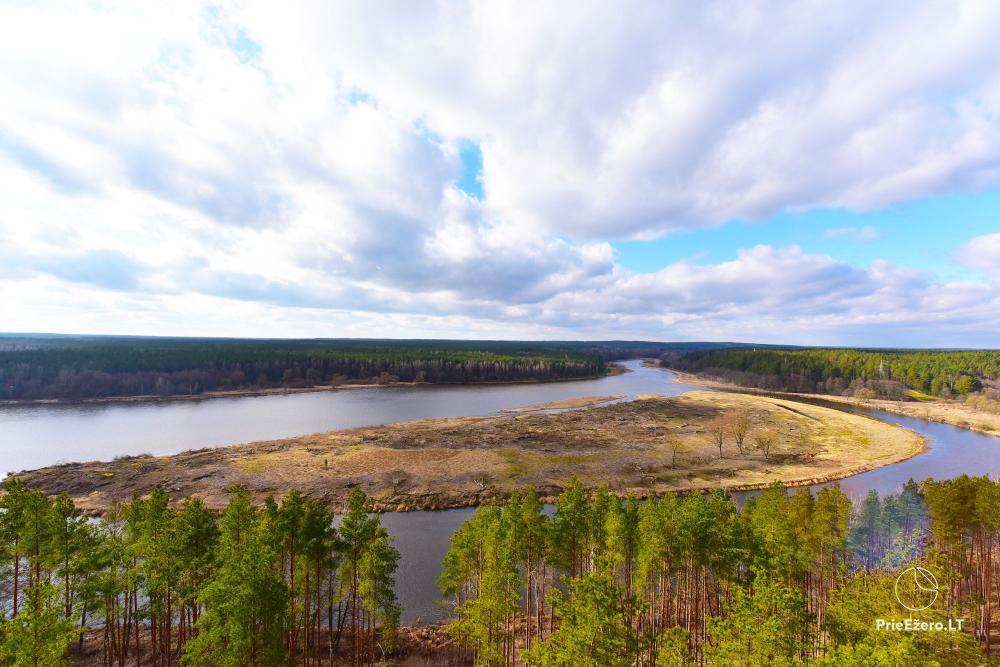
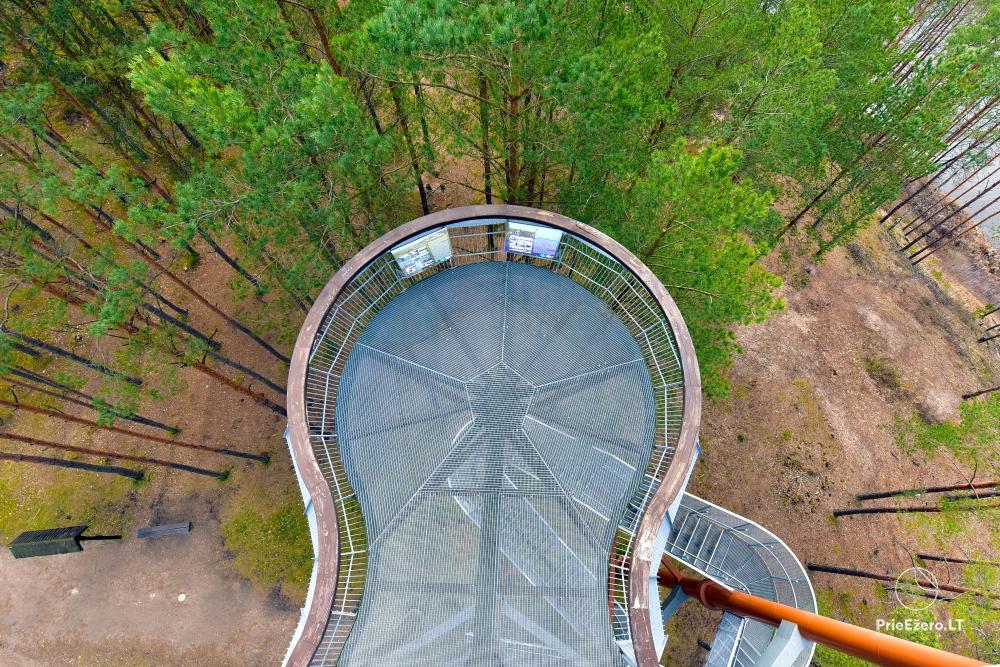
Hidden among the pine forests of Dzūkija lies the Merkinė observation tower, its height reaching as much as 26 meters. People say that it is not a tower, but a work of art, replicating the treetops and at the same time opening up wonderful views. Seeing the pine tops of the Dzūkija National Park, the confluence of two rivers, the town of Merkinė, Pastraujos Island, Merkinė hillfort and even the Merkinė pyramid, you want to sing: “How wonderful, Lithuania you are!”.
Ūla akis – a spring (source) on the left bank of the river
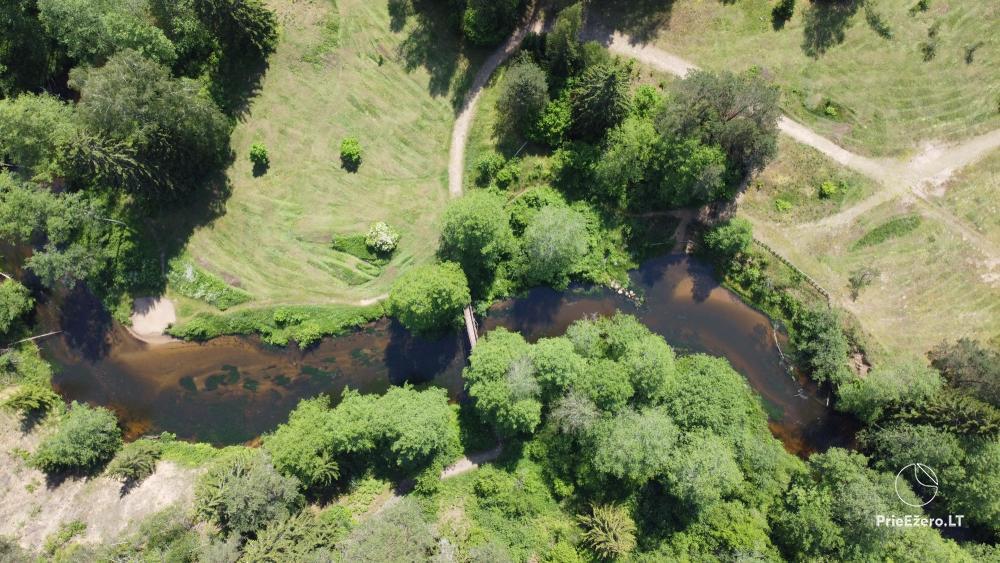
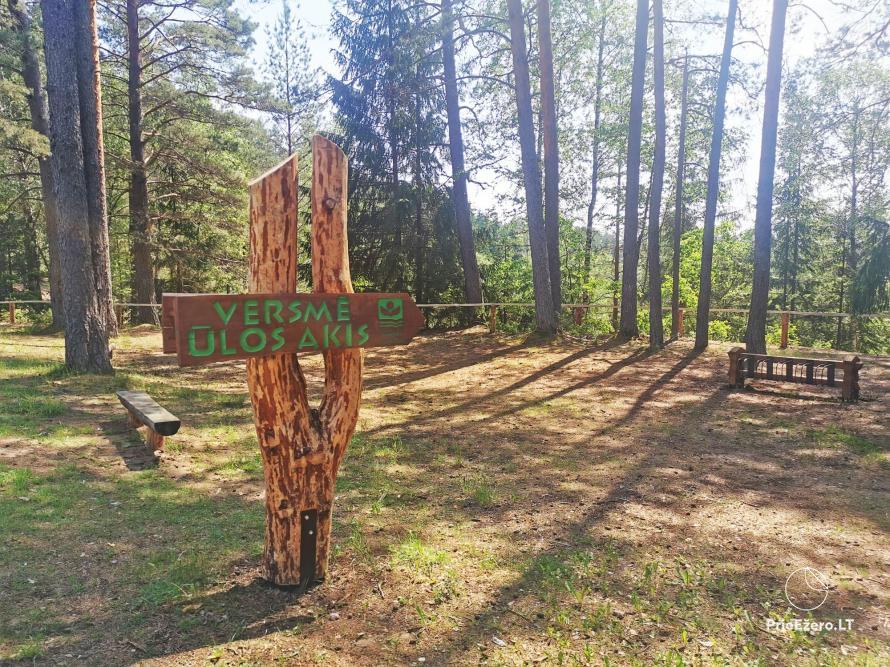
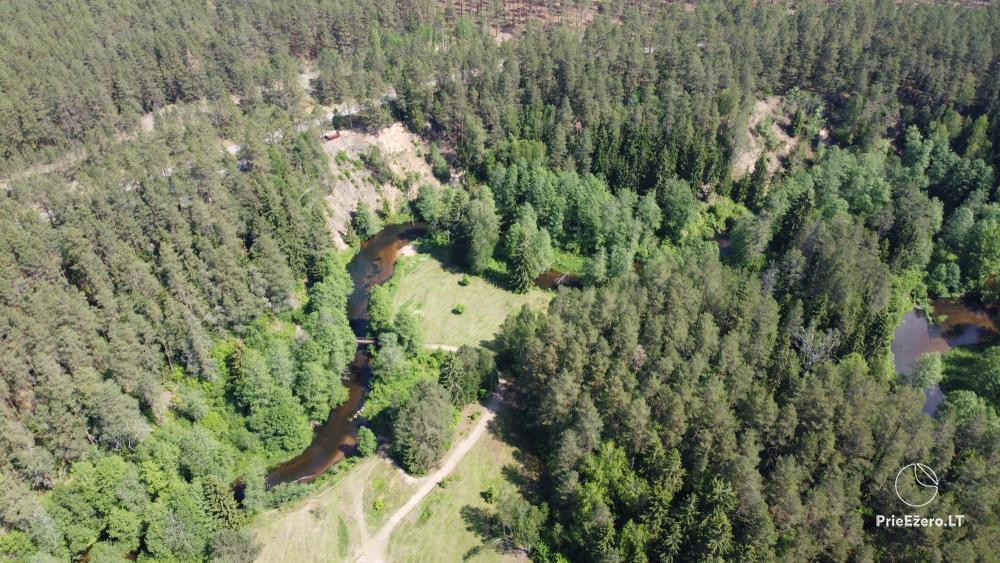
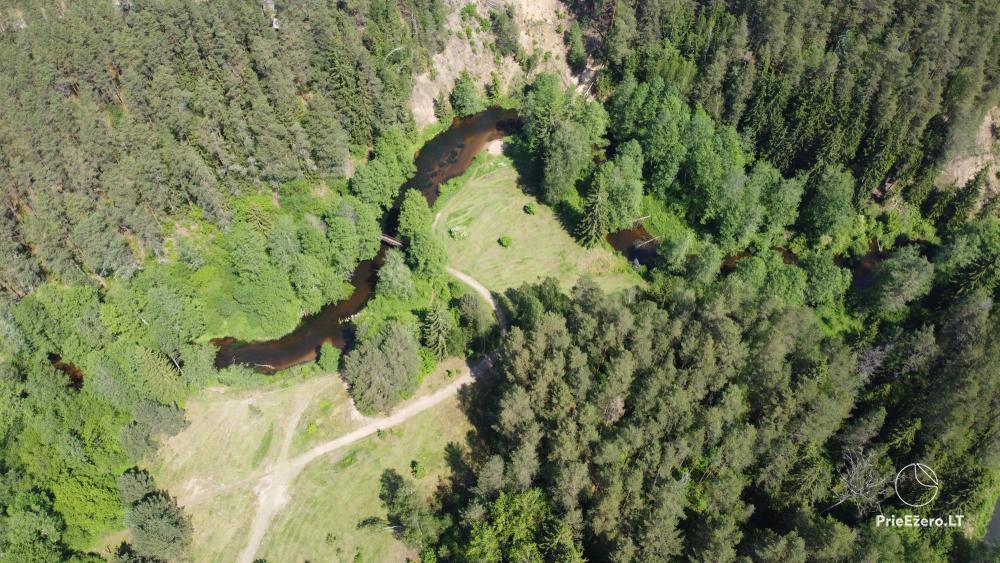
Can you say that you have seen Dzūkija if you have not been to Ūla's Eye? No way! Ūla's Eye is a hydrographic natural monument , fenced and protected from those who want to test the pressure of the eye. After passing the bridge, Ūla's Eye looks out on the terrace of the left bank of the river. It seems that something is trying to erupt from this source, but it runs out of strength. This time, let's stick our finger in and check that magical eye, the power of which we once had to test with our whole body.
The sun is setting, and there's still so much to see.
Čepkeliai Trail and Educational Trail
We rush to the largest wetland in Lithuania - Čepkeliai raisto . First of all, it is not so easy to walk here, you need to get permits, but it was worth it. This wetland complex is almost untouched by man, so nature takes care of itself. There are many different animals in the high marsh that like moisture, steppes and tundra. Here you can find pond turtles, wood frogs, capercaillies, cranes, stilts, and great egrets. Orchids bloom here and there is one of the largest cranberry forests. This is also the home of our only poisonous snake - the viper. We did not meet a viper, but we passed by a snake. Walking through Čepkeliai raisto is the same as leafing through the Red Book. As many as 254 representatives of the Red Book live and grow in the raisto: mushrooms, plants and animals.
What to do and what to see in Dzūkija National Park
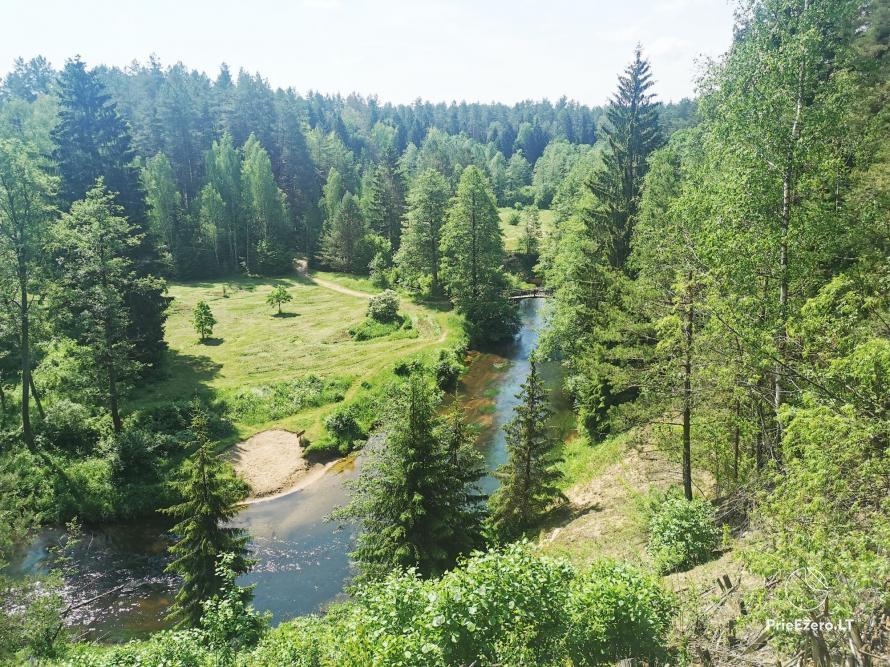
One day in Dzūkija was definitely not enough, so the next morning, just rubbing our eyes, we continue walking along the trails of the Dzūkija National Park. This national park is the largest in Lithuania. It contains ethno culture, natural monuments, history and great biodiversity. Dzūkija is also known for stump beekeeping, so we hurry to see with our own eyes how bees are cared for in the ancient way and nowadays, how honey is harvested, how wax is produced. According to the beekeeper, bees also need nature. Therefore, stump or stump beekeeping cannot be compared to frame beekeeping. The bees here are different: more wild, stronger, they take care of themselves and bring more honey. The bees growing in frame hives have already been domesticated, so they would have a hard time surviving on their own. Bees, candle making, and honey harvesting education are just a small part of the interesting things to do in the Dzūkija National Park. If you book in advance, you can:
- Learn how to tie straw bales.
- To graze.
- To start a fire with the help of flint.
- Bake some real cookies before Christmas.
- Try baking potato pancakes and buckwheat babka.
- To taste the legacy of cultural heritage.
- Attend nature lessons.
Marcinkonys - one of the largest villages in Lithuania
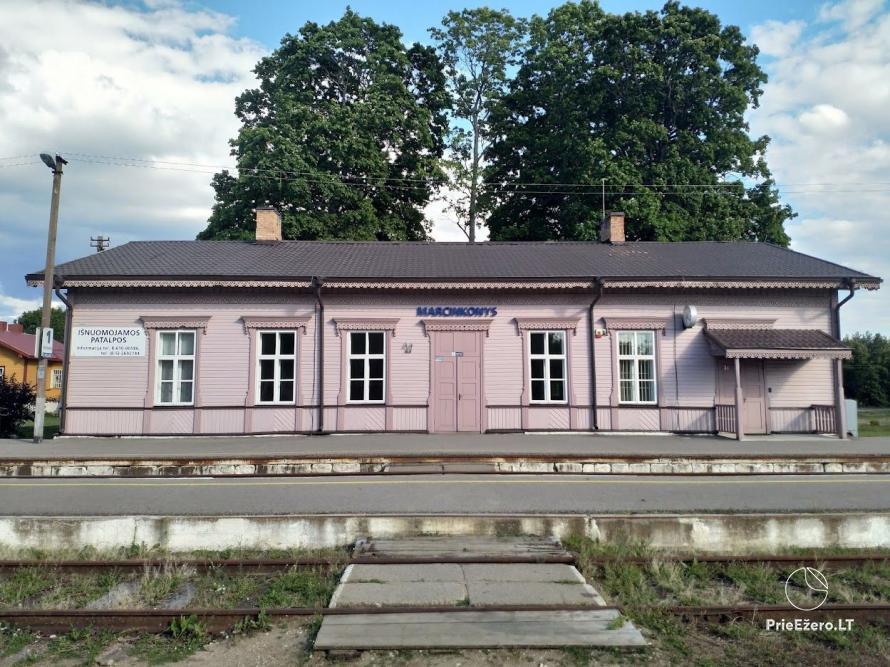
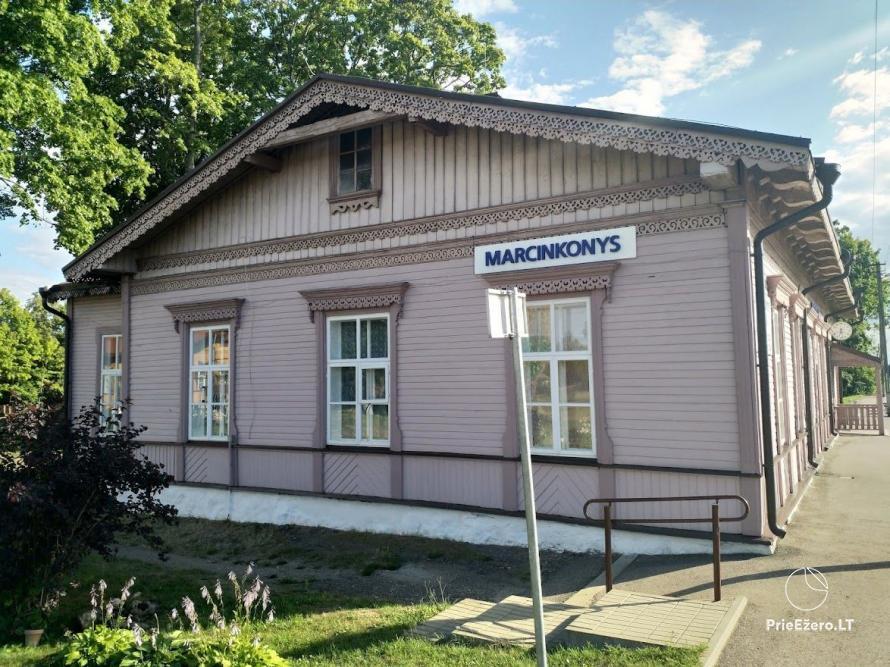
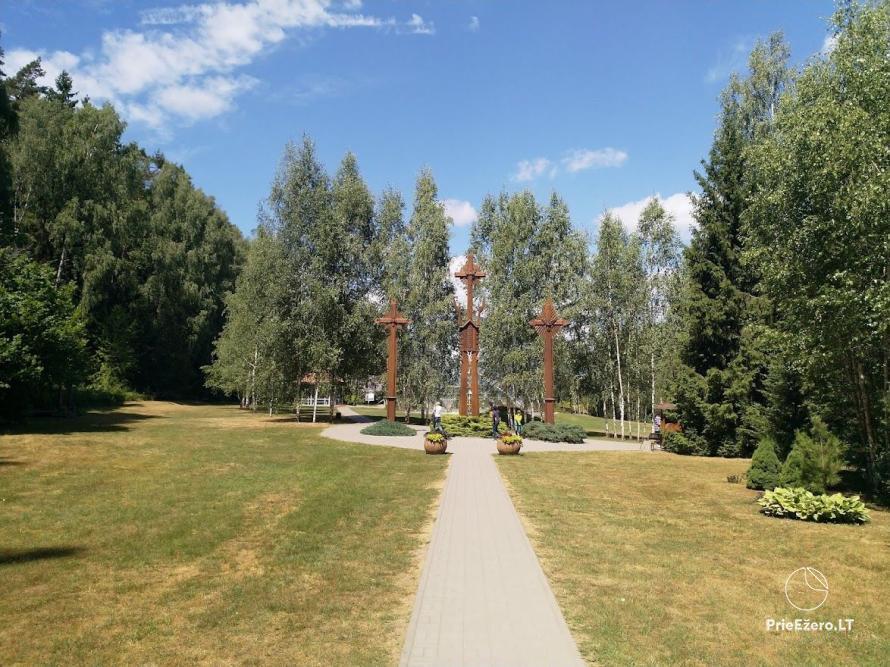
The Dzūkija Park Directorate is located in the village of Marcinkonys, which is one of the largest in Lithuania. The expansion of the village was determined by the St. Petersburg-Warsaw railway passing through the village. At the same time, trade intermediaries - Jews - settled here. Later, a narrow-gauge railway from Marcinkonys to the Katra River was built here. Partisans lived in Marcinkonys, and a silent war with the Poles was fought. Once upon a time, a water mill operated here, there was a secondary school and even a cinema. Now it is the center of the eldership, also known for its crosses, which Lithuanians built and Poles demolished.
What to see in Zervyna - the ethnographic village of Dzūkija
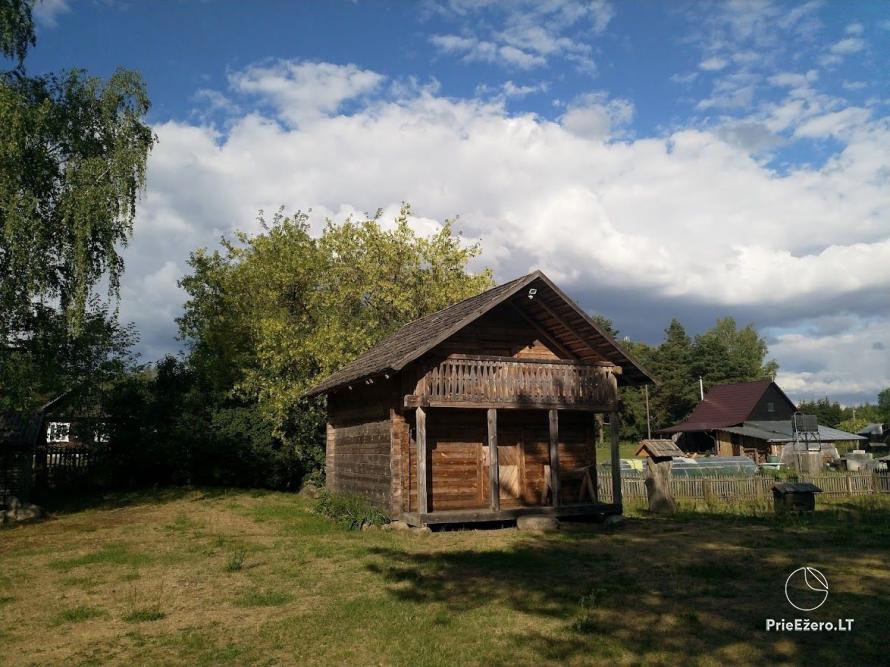
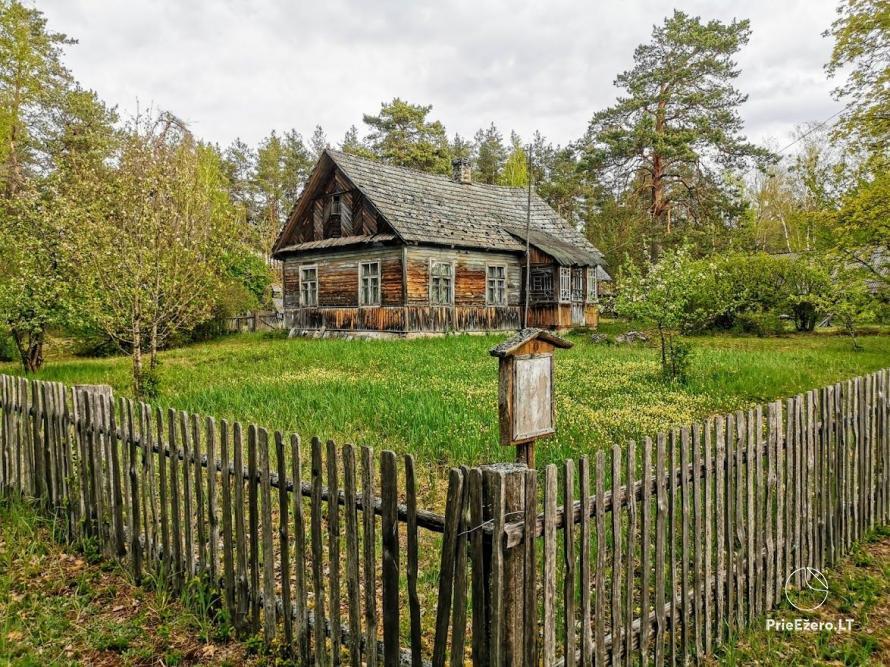
Among the natural wonders of the Dzūkija National Park, there is also a street village - Zervynos. There are 48 homesteads in the village, and 8 of them have been declared ethnographic. While hiking, we will admire the Ūla valley, with Ūla houses made of hewn logs, which are built according to a scheme created by the locals. Although the village is getting older and the population is decreasing, there is no shortage of tourists here. Everyone comes to admire the Dzūkija heritage and the preserved appearance of the old village: yellow-painted walls, a simple fence, olive bushes growing nearby and tranquility. Here you will also find unique crosses decorated with aprons.
Žuvintas Reserve: educational trail, museum, bird watching
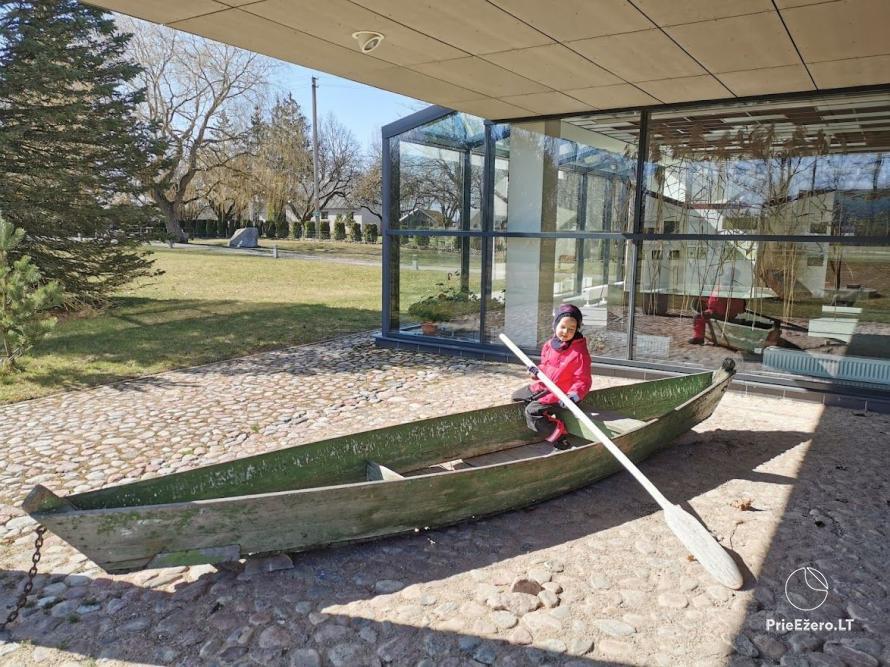
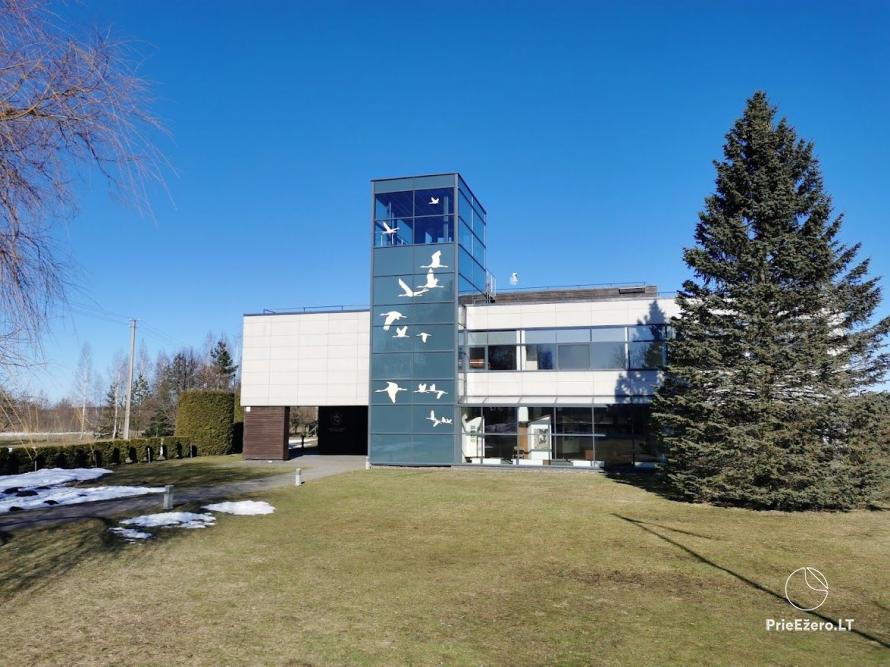
Our heads are spinning from the abundance of impressions, but on the way back home we couldn't help but visit the Žuvintas Reserve. These are Lithuanian raised bogs with a multitude of bird species and their own pearl - Žuvintas Lake. Although the lake occupies only 13 percent. of the entire reserve, we came here because of it. You definitely won't be able to swim in Žuvintas, because of the silt and the various creatures that swarm in it. However, the museum here allows you to get to know the lake closer. We learned more about the birds of Žuvintas and saw what kind of fish live in Žuvintas Lake. It turns out that Žuvintas Reserve is the birthplace of our white beauties, swans. It was from Žuvintas Lake that swans spread throughout Lithuania. Žuvintas is always alive, so everyone who comes will be able to see or hear more than one bird.
The trip around Dzūkija was full of impressions. We traveled back in time, visited the Devil's Pit, which is shrouded in myths and legends, the Merkinė Pyramid, walked along the paths of our childhood, and admired what Lithuanian nature gives us.
Yes, I really like getting in the car and driving, because it's one of the most amazing ways to travel.
There is something to do and see in Dzūkija at all times of the year!